2025 Pilgrim's Pathway Walks
Ways of Pilgrimage

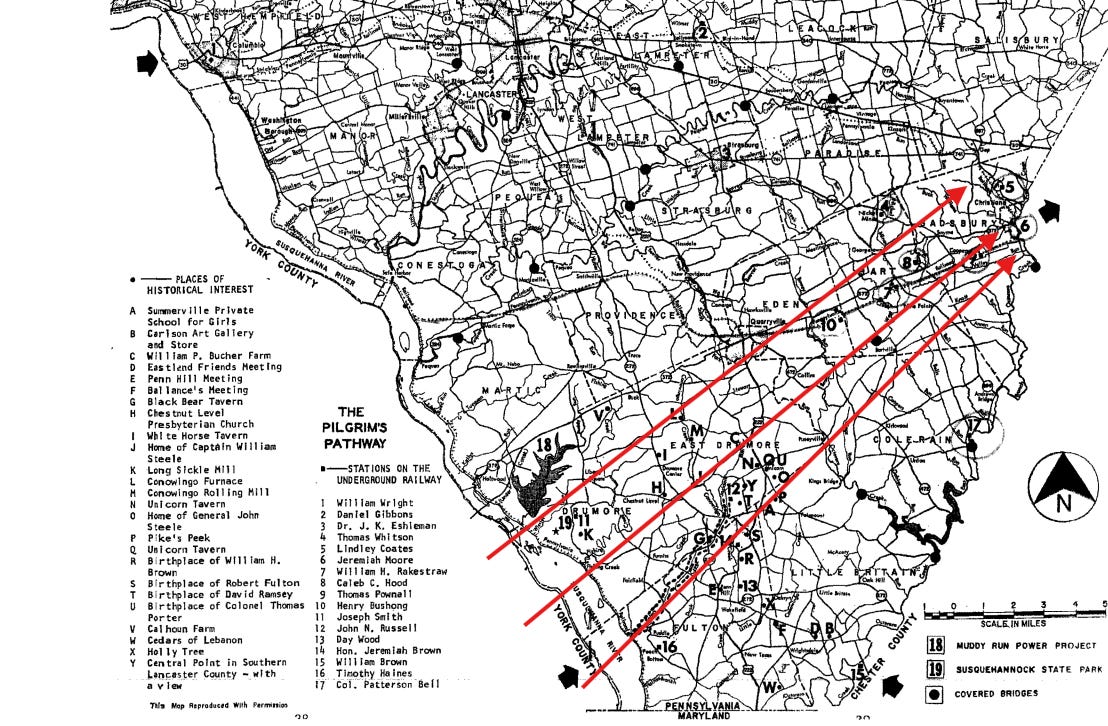
The Pilgrim’s Pathway is a well documented route of the famed Underground Railroad (UGRR) which crosses the Mason Dixon Line in northern Harford County, Maryland, ferries across the Lower Susquehanna River, and continues through southern Lancaster County towards Chester County and Philadelphia, Pennsylvania. It operated from 1830 through the end of the Civil War and supported the journeys of thousands of Freedom Seekers who escaped slavery in Virginia, Maryland, and states further south.
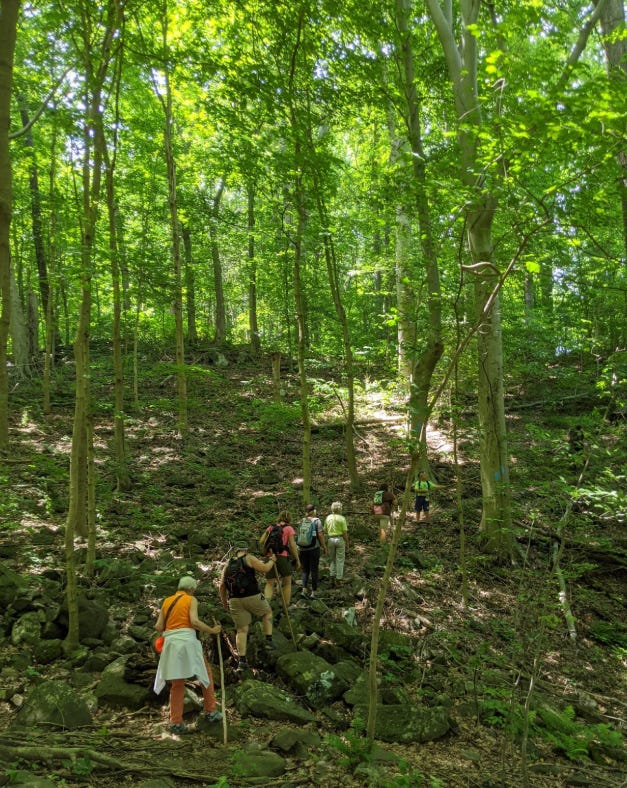
I’ve been doing research on the Pilgrim’s Pathway since 2017 as part of my work in pilgrimage studies and have guided walks through this historic landscape since 2020. In an effort to further ground truth what was documented in the 19th century, there are two upcoming walks on the Pilgrim’s Pathway in June that fellow walkers/pilgrims may be interested in.
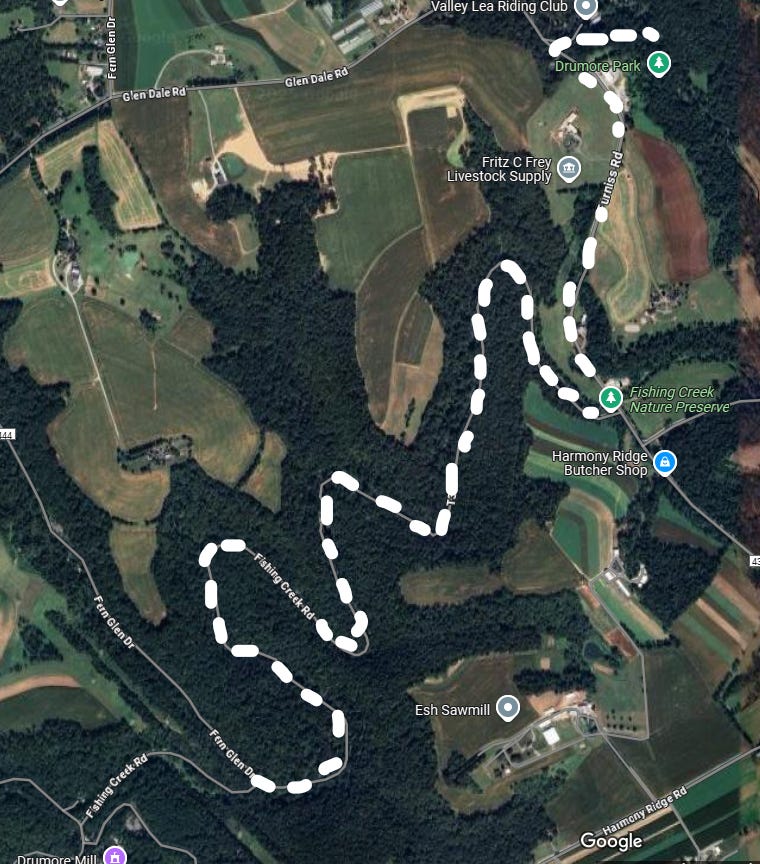
A co-hosted guided hike along Fishing Creek (4 miles gravel road) to end at Drumore Township Park (1 mile paved road) will be given Sunday June 22 with registrations through the Keystone Trails Association but know that it has begun wait-listing people after hitting its cap of 25 registrants weeks ago.
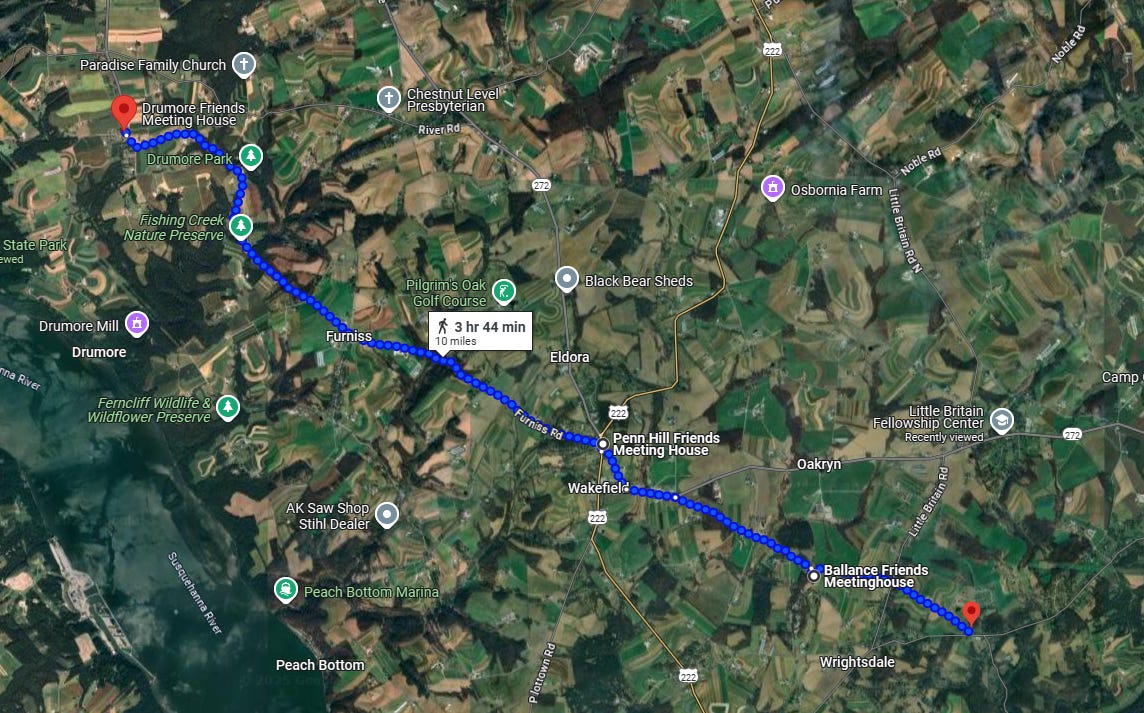
I will be taking a private walk across Amish country backroads roads (10 miles) Tuesday June 24 to link four Quaker meetinghouses whose communities provided safe houses, support, and guidance on the Pilgrims Pathway. You can contact me here if you are interested in walking with me or contact me via email at peggyeppig@gmail.com.
We are framing these walks as pilgrimages since we are setting out to honor the memory of the events and people in one of the most active and dangerous places to be involved in abolitionist activities in the U.S. I am also remembering the activist work of Thaddeus Stevens, a Lancaster lawyer who served in Congress under Lincoln’s administration and well known abolitionist. The new Thaddeus Stevens and Lydia Hamilton Center for History and Democracy that will open in Lancaster in 2026. How these historic times are reminding us of all that has come before us in times that tested the core values of Constitutional Rights.
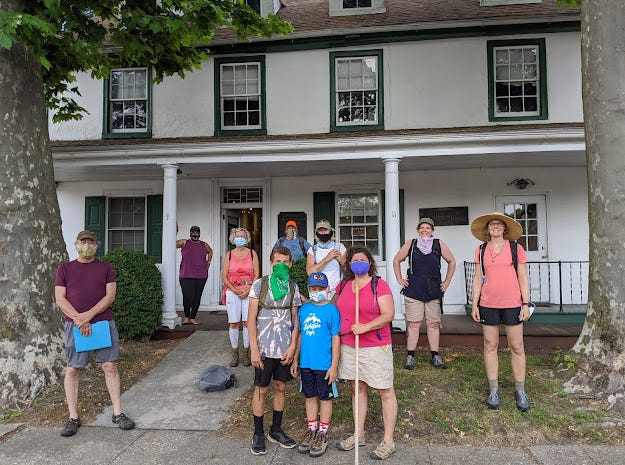
In 2020 I led a thirty-mile pilgrimage of Quakers and other friends starting from Deer Creek Friends Meetinghouse in Darlington, Maryland, to the railroad town of Christiana, Pennsylvania. It took us three days to cover the major sections of the route and, interspersed with breaks for food, water, and reflection, it was a major accomplishment to arrive at Zerchers Hotel, in the middle of a triple digit heat wave! The end of the Pilgrims Pathway, Zerchers Hotel is a member site of the (NPS) National Underground Railroad Network to Freedom. It was a spiritually moving and deeply reflective experience for everyone to arrive on that front porch.
As my work continues on the environmental history of the Pilgrims Pathway, I realize that a pilgrimage of remembrance is more than a start to finish walk. This is only part of the story. Since 2020 I have been working on a series of additional hikes that explore the many “inner passages” of the Pilgrims Pathway, creating ways that help walkers absorb and appreciate how the environmental history of this region shaped the social response to ending slavery.
Landscapes have memory. We can best tap into this memory by reading the landscape with our own two feet. I guess this is why hiking and backpacking integrate so well with learning about natural and human history in different environments. Moving across a landscape on foot with an intention in mind such as paying homage or offering reverence we tap into the meaning of land memory.
Landscape memory contains human grief, fear, and contentment. It reflects human activity, no matter how transient or temporary our time in a place. UGRR activity left imprints of passage whether in the spread of communities that offered support and protection or in the network of wagon roads that led people steeply up from the river banks to the Piedmont farmlands above.
Walking these old roads, some of them now park trails while others are paved country lanes, I can imagine with reverence the emotions of freedom seekers finally, safely having crossed the great Susquehanna. That emotion carries me through this landscape and I cannot help but feel deeply interconnected to the river hills, the forest, the open fields, and the historic places that still remain either in ruins or in preservation. I look forward to sharing the 2025 summer hikes with people who are or who wish to be connected with an emancipation landscape.